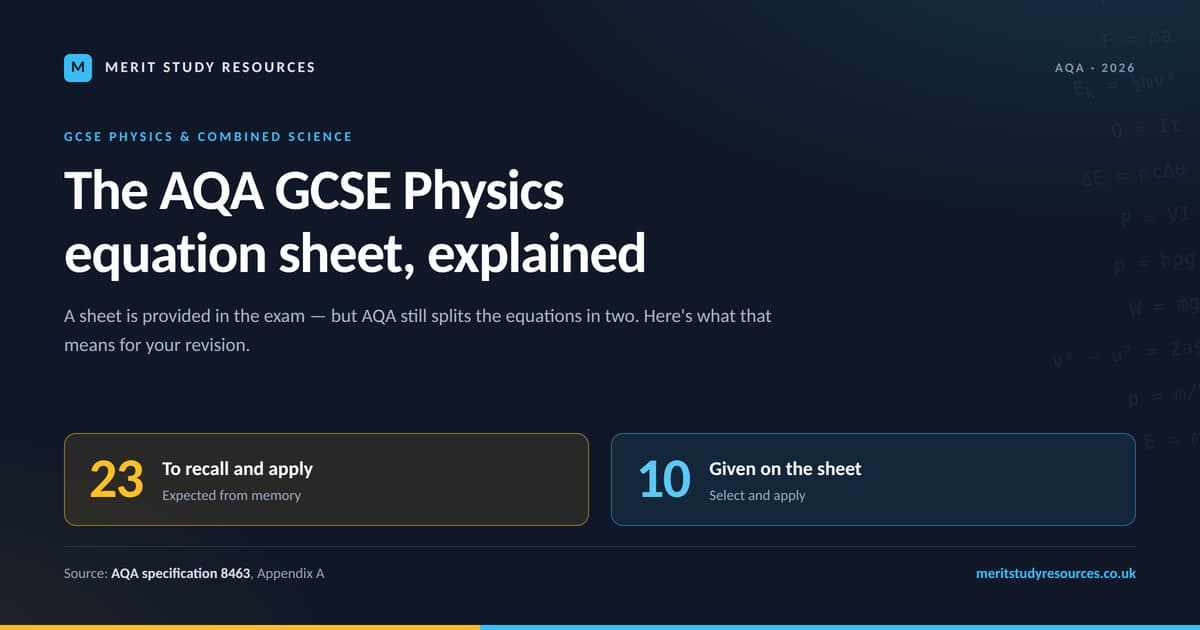
The GCSE and A-Level exam system is always evolving, but one question students keep asking is: Will formula sheets still be provided in 2026 and beyond?
The good news is that recent government updates have brought some clarity. Formula and equation sheets are not going away anytime soon. In fact, they are expected to remain in place for several more years, giving students a more stable and predictable exam experience.
In this guide, we’ll break down what’s changing, why it matters, and how you should prepare effectively.
A Brief History of Formula Sheets
Formula sheets were first introduced during the COVID-19 pandemic to support students who missed significant classroom learning. Instead of memorising every equation, students were allowed to refer to key formulae during exams, especially in GCSE mathematics, physics and combined science.
Originally, this was meant to be a temporary measure. As exams returned to normal, many expected these supports to be removed. However, due to ongoing concerns about fairness and learning gaps, the approach has continued.
In March 2026, the UK government formally asked Ofqual to extend the use of formula sheets across current GCSE specifications. The key message is clear: students will still need to understand and apply formulae, but they won’t be required to memorise them.
Ofqual has indicated that this policy is likely to remain in place until at least 2030 or 2031, including any resit exam series.
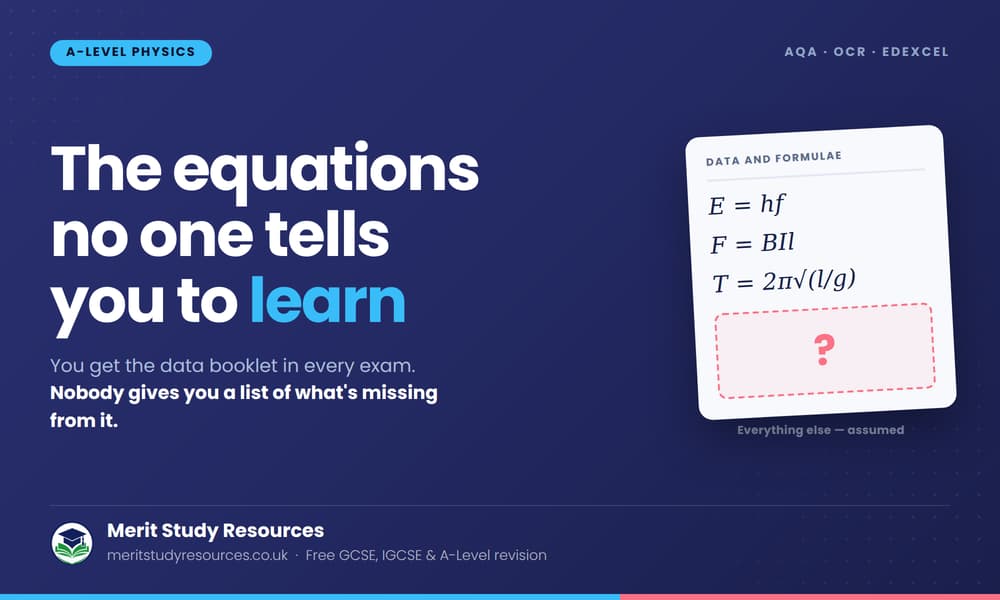
This means that students currently in lower secondary years—such as Year 8 or Year 9—can realistically expect to have access to formula sheets when they sit their GCSE exams. For A-Level students, equation sheets in subjects like physics are also expected to continue, although final decisions may vary slightly depending on the subject and exam board.
The biggest advantage of formula sheets is that they reduce the pressure of memorisation. Instead of trying to remember dozens of equations, students can focus on understanding concepts and solving problems.
This shift encourages deeper learning. Teachers can spend more time explaining why formulas work rather than just asking students to memorise them. It also helps create a fairer system, especially for students who experienced disruption in recent years.
However, it’s important not to misunderstand their role. Having a formula sheet doesn’t make exams easier—it simply changes what is being tested. You still need to know when to use each formula and how to rearrange it correctly.
Other GCSE & A-Level Changes on the Horizon
The discussion around formula sheets is part of a wider review of the UK education system. One proposed change is reducing total exam time by around two to three hours for the average student.
New GCSE and A-Level specifications are expected to be introduced from September 2029, with the first exams under the new system taking place in 2031. While these changes are still being finalised, they suggest a gradual move towards a more balanced and application-focused assessment style.
To make the most of formula sheets, your revision strategy needs to adapt. Simply relying on the sheet during exams is not enough—you need to become comfortable using it under pressure.
Practising with past papers is one of the most effective ways to do this. When you work through questions in timed conditions, you naturally learn where formulas are located and how quickly you can apply them. Over time, this builds confidence and speed.
It’s also helpful to practise without the formula sheet occasionally. This strengthens your understanding and ensures you’re not completely dependent on it. When you check your answers afterwards using the sheet, you reinforce both memory and application.
Most importantly, focus on understanding the concepts behind each formula. Exams are designed to test problem-solving ability, not just recognition.
Conclusion
The extension of GCSE and A-Level formula sheets into the 2030s is a significant shift in how exams are structured. It reflects a growing emphasis on understanding, application and fairness rather than pure memorisation.
For students, this is an opportunity to study smarter. Instead of spending hours memorising equations, you can focus on mastering how to use them effectively.
Staying updated with official changes, practising consistently, and using high-quality revision resources will put you in a strong position for success. If you’re looking for structured support, explore our revision materials and start building your confidence early.
Useful links and resources
Ready to try it? Every paper in the library comes with its mark scheme and a
worked solution, so you can practise without hunting for files.
Find past papers