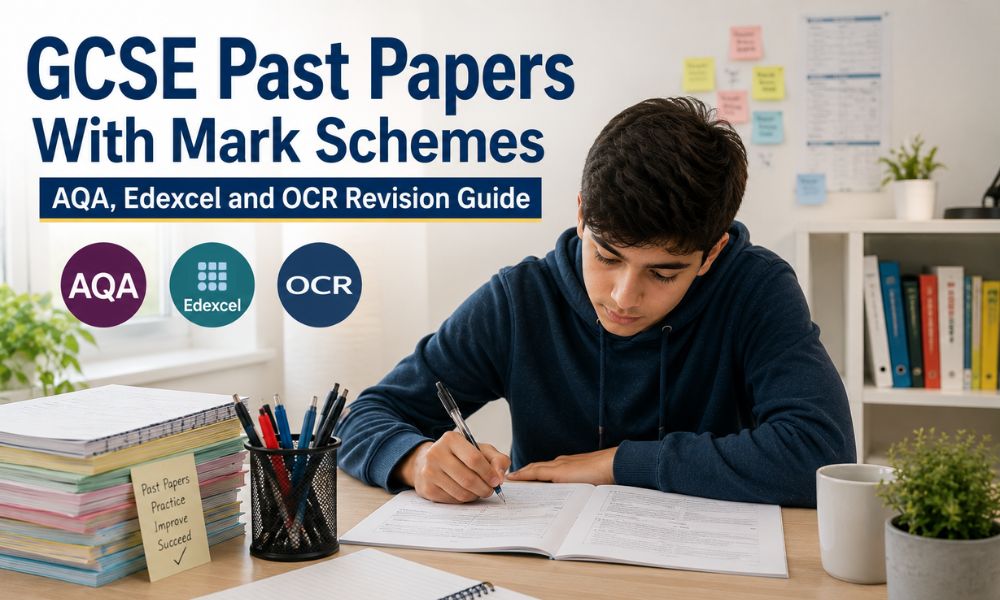
If you are preparing for GCSE exams, past papers are one of the most useful revision tools you can use. A GCSE past paper shows you how real exam questions are written, how topics are combined and how much detail examiners expect in an answer. When you use past papers with mark schemes, you are not just practising questions; you are learning how marks are awarded.
Many students download GCSE past papers close to exam season, complete a paper and then move on. That is better than doing nothing, but it is not the best way to improve. The real value comes from using past papers carefully: choosing the right exam board, marking your work honestly, correcting mistakes and revisiting weak topics.
At Merit Study Resources, students, parents and tutors can find GCSE revision resources designed to make exam preparation more structured. This guide explains how to use GCSE past papers, mark schemes and topic practice in a way that actually supports better grades.
What Is a GCSE Past Paper?
A GCSE past paper is a real exam paper from a previous year. It is usually published by an exam board such as AQA, Pearson Edexcel or OCR after the exam series has finished. Past papers often come with mark schemes, and sometimes examiner reports, which explain how students performed and what common mistakes were made.
Past papers are different from ordinary worksheets because they reflect the structure and style of the real exam. They show the wording, mark allocation, command words, question difficulty and timing that students may face in the exam hall.
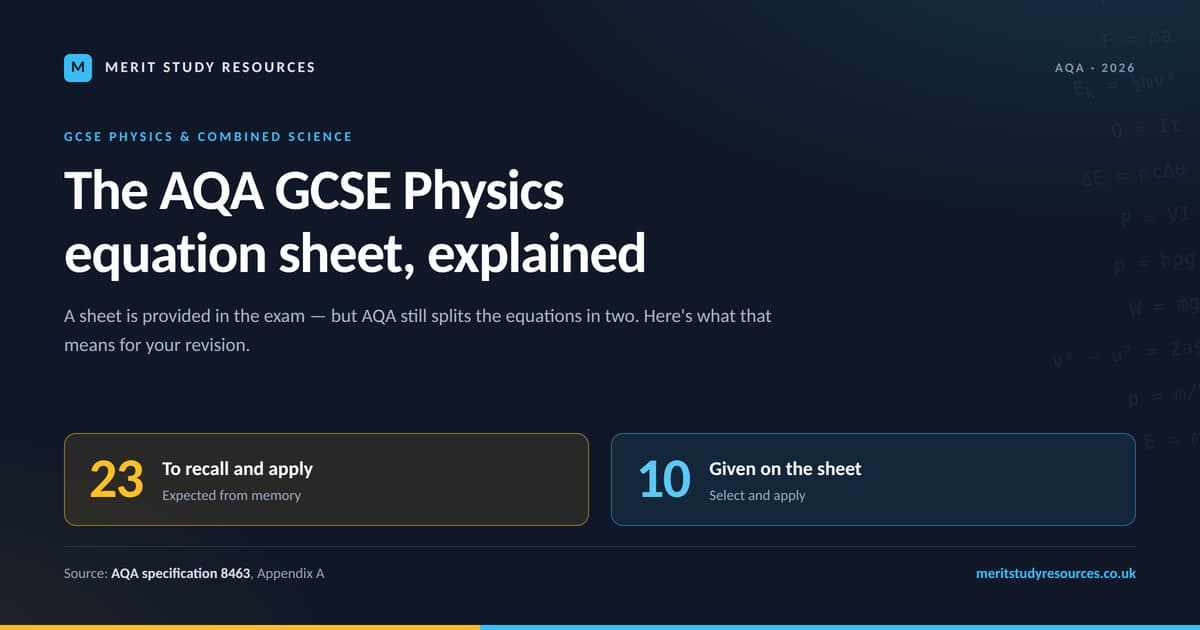
For example, a GCSE Maths past paper may include calculation questions, problem-solving tasks and multi-step reasoning. A GCSE English Language paper may include reading analysis, comparison, evaluation and creative or transactional writing. A GCSE Science paper may test knowledge, required practicals, data handling and application of concepts.
Why Mark Schemes Matter
Using a GCSE past paper without the mark scheme is like doing revision with the lights half off. You may know whether an answer feels right, but you cannot be sure how an examiner would award marks.
Mark schemes show the exact points needed for credit. In Maths, they often separate method marks from accuracy marks. This means a student can sometimes earn marks even if the final answer is wrong, provided the method is correct. In Science, mark schemes show the key terms and explanations required. In English, they help students understand assessment objectives and the difference between a basic answer and a developed one.
When students use mark schemes properly, they begin to notice patterns. They learn which words examiners reward, where marks are commonly lost and how much detail is needed for different question types. This is why GCSE past papers with mark schemes are so powerful.
Choose the Right Exam Board
Before downloading any GCSE past paper, check your exam board. The main GCSE exam boards in England include AQA, Pearson Edexcel and OCR. Some schools may also use WJEC Eduqas or other boards depending on the subject.
This matters because each exam board has its own specification, paper structure and style. AQA GCSE Maths, Edexcel GCSE Maths and OCR GCSE Maths all assess similar mathematical skills, but the layout and question style can feel different. The same is true for English, Science, History, Geography and other subjects.
If you are not sure which exam board you are studying, ask your school, tutor or teacher before spending hours revising from the wrong papers.
Official exam board resources:
These official sources are useful for checking specifications and original papers. Merit Study Resources can then help you build a more organised revision routine around those papers.
GCSE Maths Past Papers
GCSE Maths is one of the most searched subjects for past papers because it is compulsory and often needed for college, apprenticeships, university courses and employment. Students usually sit either Foundation or Higher tier.
Foundation papers are suitable for students working towards grades 1 to 5. Higher papers are for students aiming for grades 4 to 9. Choosing the right tier is important because the question difficulty and grade range are different.
When using GCSE Maths past papers, do not only check the final answer. Look at your working. Did you choose the right method? Did you show enough steps? Did you lose marks because of rounding, units or careless arithmetic?
For extra practice, use topic-based resources alongside full papers. Merit Study Resources has a dedicated guide on GCSE Maths revision worksheets with answers to help students practise weaker topics before attempting full exam papers.
GCSE English Past Papers
GCSE English past papers are useful because they help students understand the timing and structure of the exam. English Language papers usually include reading questions and writing tasks. English Literature papers test set texts, poetry, drama or prose depending on the exam board.
Many students lose marks in English not because they lack ideas, but because they do not answer the exact question. Past papers help students practise selecting evidence, explaining language choices, structuring paragraphs and writing under time pressure.
When marking English past papers, use the mark scheme to understand the assessment objectives. Ask what the examiner is really looking for. Is the question testing analysis, comparison, evaluation, structure, vocabulary or accuracy? Once students understand the skill being tested, their answers become more focused.
GCSE Science Past Papers
GCSE Science past papers are especially useful because Science exams often combine knowledge, calculations, graphs, required practicals and application questions. Students may know a topic in class but still struggle when the exam question presents it in an unfamiliar context.
Whether you study Combined Science or separate Biology, Chemistry and Physics, past papers help you practise applying knowledge. Use the mark scheme to check whether your answer includes the correct scientific terms. Examiner reports can also be useful because they explain common mistakes and misunderstandings.
For Science, it is a good idea to keep a mistake log. Write down the topic, the error and the correct explanation. Over time, this becomes a personalised revision list.
Past Papers by Topic vs Full Papers
Students often ask whether they should revise with full GCSE past papers or topic questions. The best answer is both.
Topic questions are useful when you are learning or repairing a weak area. If you struggle with algebra, ratios, electricity or poetry comparison, topic practice helps you focus without being distracted by everything else.
Full past papers are better once you have revised several topics and want to practise exam timing. They help you build stamina, manage pressure and move between different question types.
A strong revision plan might look like this: revise a topic, complete topic questions, mark and correct mistakes, then attempt a full past paper under timed conditions. This gives you both skill practice and exam practice.
How to Use GCSE Past Papers Properly
Start by choosing one subject and one exam board. Download a paper, the mark scheme and, if available, the examiner report. Sit the paper in timed conditions without checking notes. This gives you a realistic picture of what you can do independently.
After completing the paper, mark it carefully. Do not simply count the score and move on. Look at every lost mark. Was the mistake caused by weak knowledge, poor timing, misunderstanding the question or not using the correct exam wording?
Then create a correction list. This list should guide your next revision session. If you lost marks on simultaneous equations, revise that topic. If you lost marks on six-mark Science questions, practise longer written answers. If you lost marks on English analysis, practise explaining quotations more clearly.
The students who improve most are not always the ones who do the most papers. They are the ones who learn the most from each paper.
Common Mistakes Students Make
One common mistake is starting past papers too late. If you wait until the final week, you may discover weak topics without enough time to fix them. Start early so every paper gives you useful feedback.
Another mistake is using the wrong exam board. This can still be helpful for general practice, but it should not replace the papers for your actual specification.
Students also sometimes mark too generously. Be strict with the mark scheme. If the mark scheme requires a key term, include that term. If it requires working, show the working. This helps you understand how examiners think.
Finally, do not repeat papers without reviewing mistakes. Repetition only works if correction happens in between.
Build a GCSE Past Paper Revision Routine
You do not need to complete a full paper every day. A balanced plan is usually more effective. For example, you could use one session for topic revision, one session for past paper questions and one session for corrections.
As exams get closer, increase timed practice. Try to recreate exam conditions: quiet room, no phone, correct time limit and no notes. This helps reduce nerves because the real exam begins to feel more familiar.
Parents and tutors can help by checking that papers are marked, corrections are completed and weak topics are revisited. The aim is not just to finish papers, but to turn each paper into a learning tool.
Find GCSE Revision Resources
GCSE past papers are essential, but they work best when combined with structured revision resources. Students need topic worksheets, mark schemes, model answers, revision notes and regular practice.
Merit Study Resources provides study materials for students, parents, tutors and tuition centres who want clearer, more organised GCSE revision support. Explore Merit Study Resources for worksheets, past paper support, topic practice and exam preparation materials.
If you are preparing for exams, start with the right GCSE past paper, mark it carefully and use every mistake as a clue for what to revise next. That is how past paper practice becomes real progress.
FAQs
Where can I find GCSE past papers?
You can find GCSE past papers from official exam board websites such as AQA, Pearson Edexcel and OCR. You can also use revision sites and study resource platforms to organise practice by subject and topic.
Are GCSE past papers useful for revision?
Yes. GCSE past papers are useful because they show real exam question styles, timing, mark allocation and common topic patterns.
Should I use GCSE past papers with mark schemes?
Yes. Mark schemes are essential because they show how marks are awarded and help students understand what examiners expect.
How many GCSE past papers should I do?
Quality matters more than quantity. It is better to complete a paper, mark it carefully and correct mistakes than to rush through several papers without learning from them.
Should I use AQA, Edexcel or OCR GCSE past papers?
Use the exam board your school or course follows. AQA, Edexcel and OCR papers can all be useful, but your main practice should match your actual specification.
Ready to try it? Every paper in the library comes with its mark scheme and a
worked solution, so you can practise without hunting for files.
Find past papers