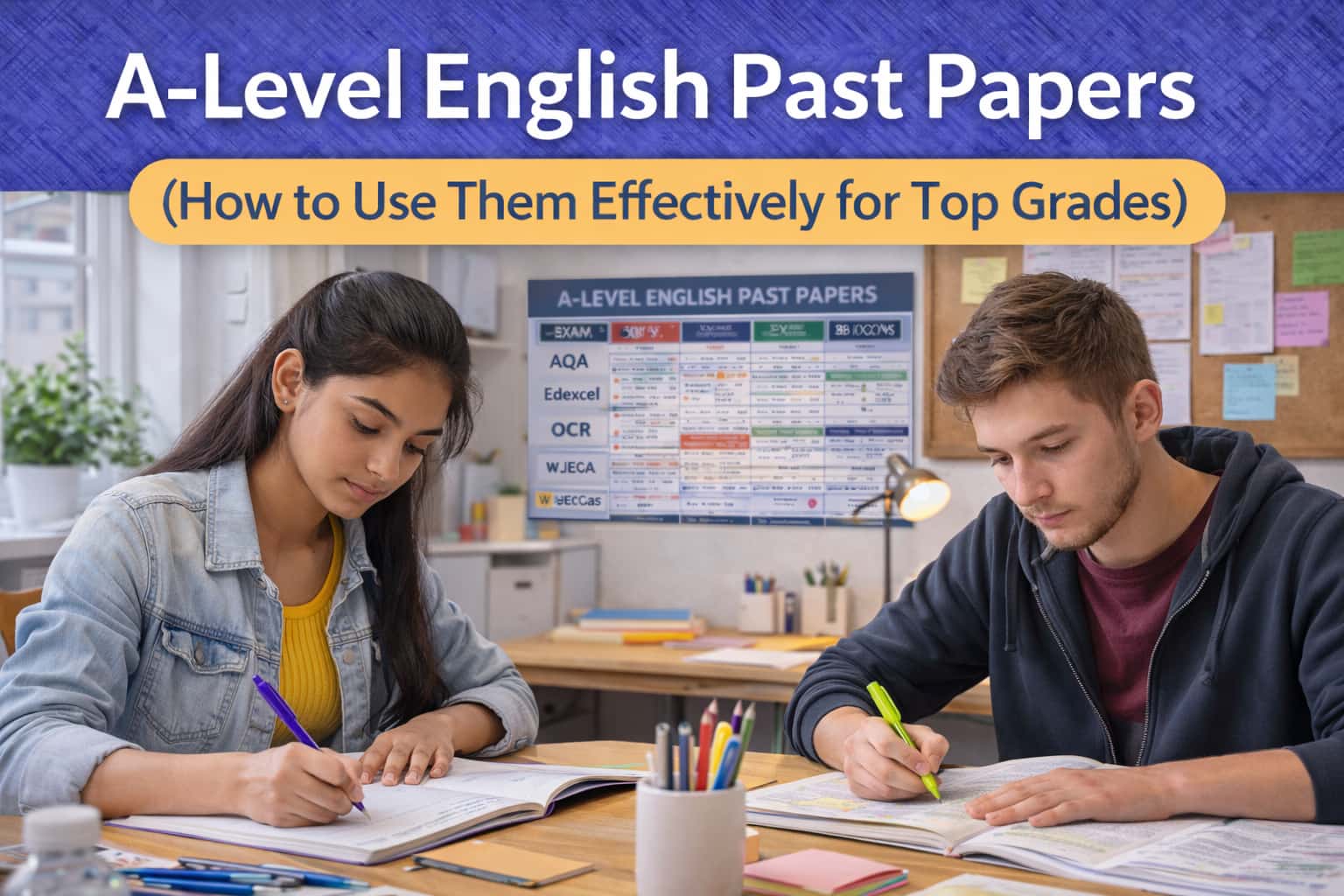
A-Level English is not just about knowing the texts or writing long essays. It is about answering the right question, in the right way, under exam conditions. Every year, many capable students lose marks not because they lack knowledge, but because they misunderstand question focus, struggle with timing, or fail to meet assessment objectives clearly.
From our experience supporting A-Level students across the UK, regular practice with A-Level English past papers is one of the most reliable ways to improve grades. Past papers show you exactly how exams are structured, what examiners reward, and where students commonly lose marks.
This guide explains why A-Level English past papers matter, how to use them properly, and how to include them in a smart revision plan that actually works.
Why A-Level English Past Papers Are Essential
Students who practise A-Level English past papers consistently are more likely to:
-
Understand how exam questions are worded
-
Identify what the question is really asking
-
Structure essays clearly and logically
-
Manage time effectively across papers
-
Reduce stress and panic on exam day
In UK A-Level English exams, examiners reward focused argument far more than overly complex language. Past papers train you to stay relevant, structured, and precise.
What Is Included in A-Level English Past Papers?
Most A-Level English past papers include a combination of:
-
Unseen text analysis
-
Essay questions on set texts
-
Comparative questions
-
Critical interpretation tasks
-
Strictly timed writing sections
By practising past papers, you learn:
-
How much to write for each question
-
How to balance analysis and quotation
-
How to meet assessment objectives clearly
This is difficult to learn from textbooks alone.
A-Level English Past Papers by Exam Board
A-Level English papers vary depending on the exam board. While core skills are similar, question structure and mark schemes are not identical.
Common exam boards include:
-
AQA
-
Pearson Edexcel
-
OCR
-
Eduqas / WJEC
You should always practise past papers that match your registered exam board. Using the correct board papers helps you understand the exact style, wording, and marking approach you will face in the real exam.
👉 For board-specific A-Level English past papers with mark schemes, use our A-Level past papers practice hub that reflects real exam formats.
How to Use A-Level English Past Papers Effectively
Simply downloading past papers is not enough. To improve results, you need to use them properly.
1️⃣ Practise Under Real Exam Conditions
For a typical essay question, aim to spend around 45 minutes writing and 5 minutes reviewing. This builds stamina and exam confidence.
2️⃣ Focus on Question Interpretation
Many marks are lost because students:
Before writing, underline key terms and briefly plan your response.
3️⃣ Review Using Mark Schemes
After completing a paper:
-
Compare your answer with the mark scheme
-
Identify where marks are awarded
-
Note examiner language and expectations
This review stage is where real improvement happens.
4️⃣ Improve Structure and Clarity
High-scoring answers usually:
-
Address the question from the first paragraph
-
Follow a clear paragraph structure
-
Use relevant evidence effectively
-
Stay focused throughout
Examiners can easily spot memorised essays, so avoid generic responses.
When Should You Start Using A-Level English Past Papers?
The best time to start using past papers is after you understand the texts and assessment objectives.
A practical timeline:
-
January–February: Section-based and untimed practice
-
March–April: Full past papers under timed conditions
-
May–June: Light practice and targeted revision
Many students align past paper practice with dates from the A-Level exam timetable 2026 UK to manage workload more effectively.
Past Papers for Private Candidates and Resit Students
Past papers are especially valuable for:
They provide structure and clarity when studying independently without daily classroom support. Many candidates improve outcomes further by combining past paper practice with expert A-Level revision guidance.
Common Mistakes Students Make with English Past Papers
Avoid these common mistakes:
-
Writing without a clear plan
-
Ignoring assessment objectives
-
Practising without timing
-
Skipping mark-scheme review
Quality practice matters more than quantity.
Final Tips for A-Level English Exam Success
-
Practise a range of question types
-
Focus on clarity, not complexity
-
Review mistakes honestly
-
Improve one weakness at a time
A-Level English past papers are not just revision tools — they are exam-training tools.
Frequently Asked Questions (A-Level English Past Papers)
Are A-Level English past papers free to use?
Yes. Most A-Level English past papers are available for free and can be used for revision and exam practice.
How many A-Level English past papers should I complete?
Completing fewer papers with full review is more effective than rushing through many without feedback.
Should I practise timed essays?
Yes. Timed practice is essential to improve structure and time management.
Are past papers enough to get top grades?
Past papers are essential, but combining them with structured revision and expert guidance gives the best results.
🔗 Helpful Next Steps
Ready to try it? Every paper in the library comes with its mark scheme and a
worked solution, so you can practise without hunting for files.
Find past papers